UFLA professors take part in a workshop in the United States
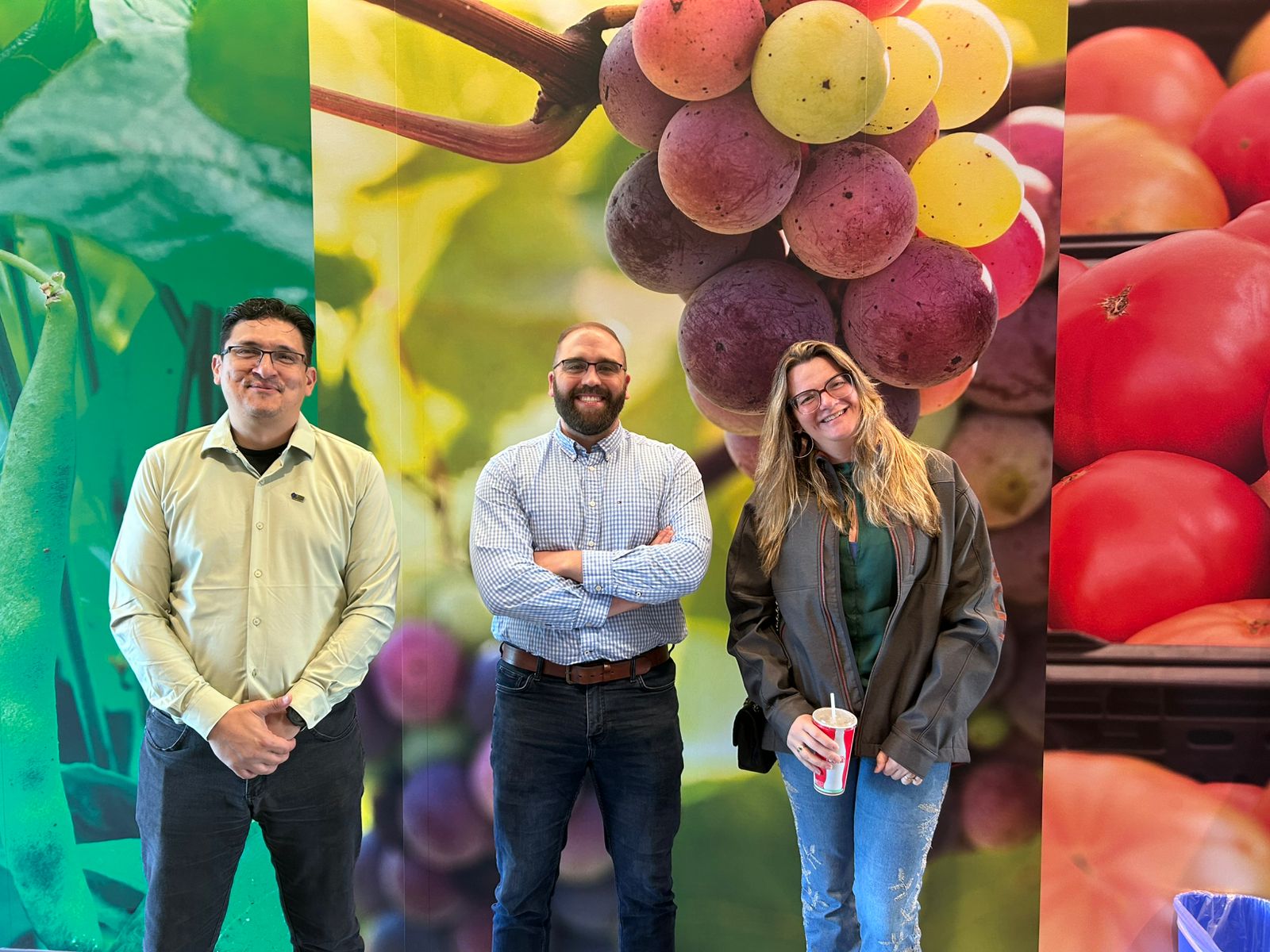
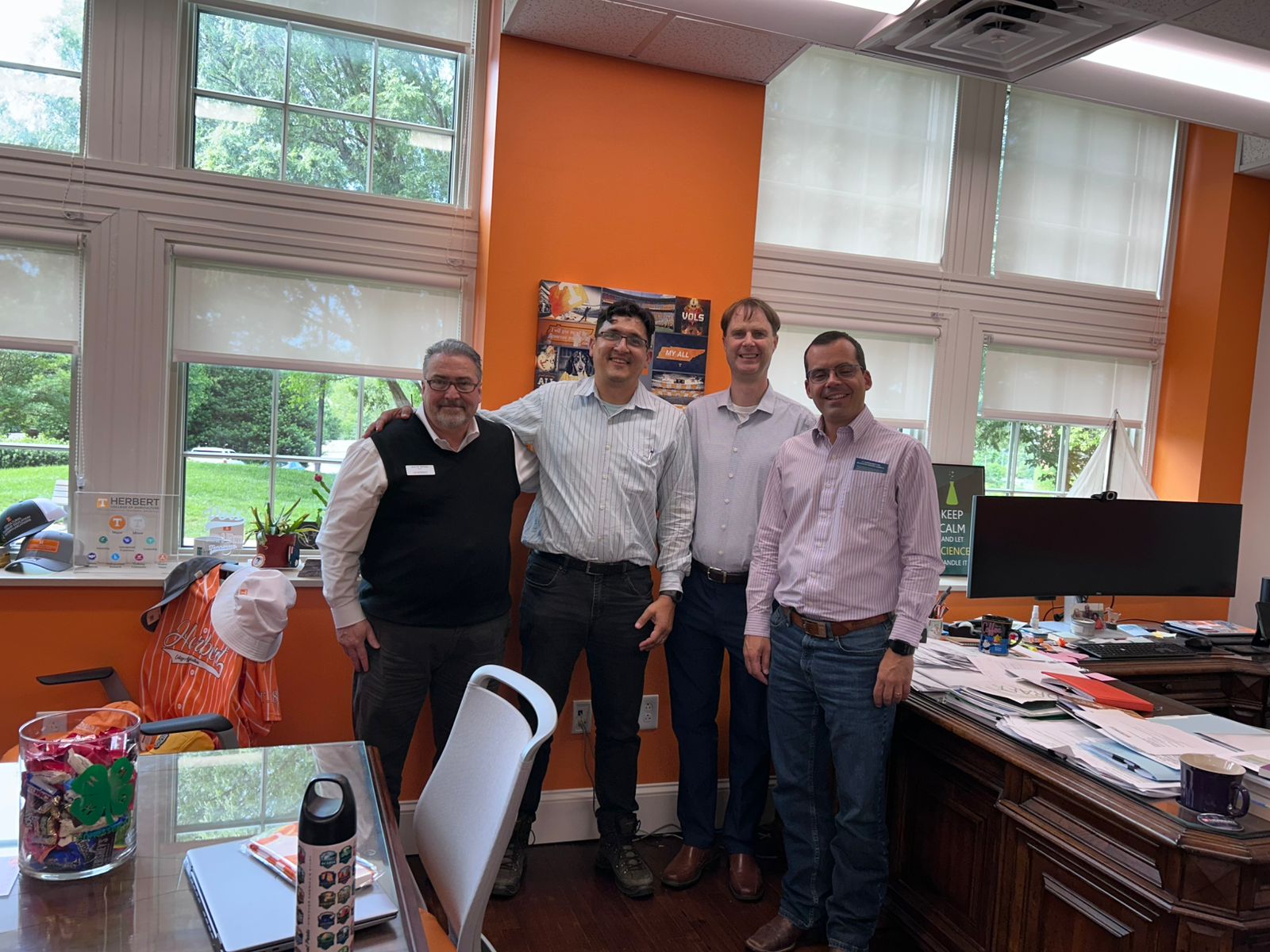
Researchers and professors from various institutions in Brazil take part in the Brazil-University of Tennessee Workshop on Sustainable Agriculture. Held in Knoxville, Tennessee, from April 27th to May 1st, the event included the participation of three UFLA professors: Flávio Medeiros, from the Department of Plant Pathology and Director of International Relations, Fernanda Medeiros, head of the Department of Agriculture, and Elaine Dorneles, from the Department of Veterinary Medicine.
The program consisted of a workshop featuring presentations from the different departments of the University of Tennessee Institute of Agriculture, as well as from the various Brazilian institutions present (UFLA, UESC, UFRPE, USP, and Embrapa). Following this, each researcher presented their line of research and potential interests for collaboration. At the end, discussion tables were held on the themes of precision agriculture, sustainable animal production systems, and circular bioeconomy and one health, a conservation and biodiversity approach to strengthening food systems.
UFLA-University of Tennessee Partnership
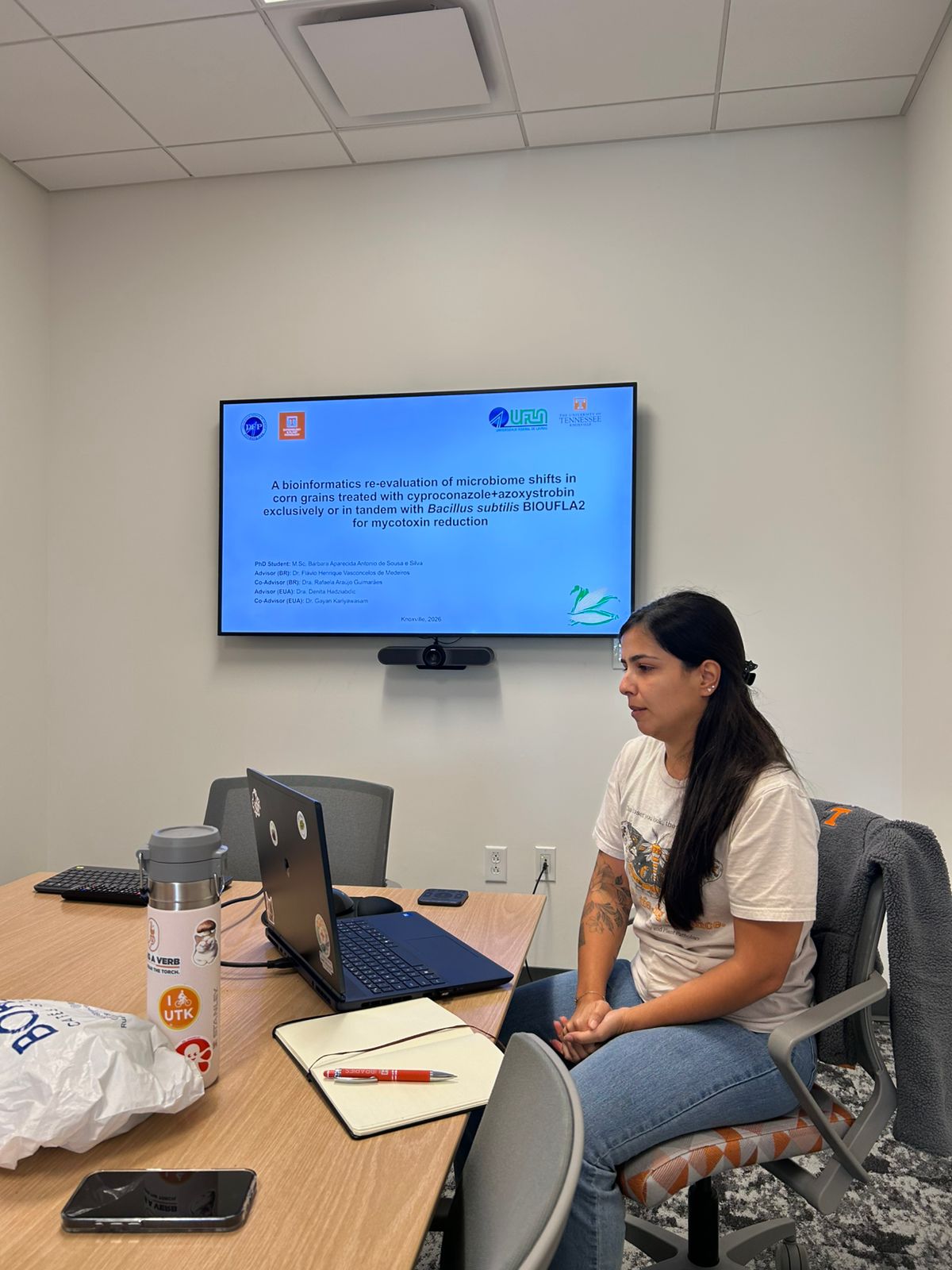
The partnership between UFLA and the University of Tennessee Institute of Agriculture is in its second year. Since the signing of the protocol of intent, two visits by delegations from the American university to Lavras have been made, alongside an activity held at UFLA, with the funding of these actions provided by the University of Tennessee through a project promoting the internationalization of research and the mobility of faculty and students from the American university. Furthermore, UFLA currently has a doctoral student in a sandwich PhD program in Tennessee: Bárbara Aparecida Antonio de Sousa e Silva, from the graduate program in agronomy/plant pathology.
For Professor Flávio Medeiros, this partnership brings gains to both institutions:
“They have a goal that, within five years, at least half of all students at the Institute of Agriculture must have at least one international experience. This represents a contingent of 250 students in mobility per year, an opportunity not only to receive but also to send our students to the University of Tennessee. This is a mutually beneficial partnership.”
Medeiros adds that this partnership can go beyond Agricultural Sciences: “There is great potential for connection between the two universities, and not just in the area of agricultural sciences, but in all areas of knowledge in which UFLA operates. With the approval of CAPES/Global, we hope to be able to collaborate more with our American colleagues in various fields of knowledge, not only in research but also in international teaching and extension.”
Immersions, connections, and partnerships
The Workshop provided a series of immersions, connections, and partnerships for the UFLA faculty. On April 28th, a visit was made to Tennessee research and extension stations. As a university designated as a Land-grant in the state of Tennessee, there is a connection with the extension service and assistance to extension agents, with one existing for each county in the State. On April 29th and 30th, the professors were divided into groups according to each one's specialty, with a host professor assigned to each.
Professors Flávio and Fernanda went to the stations in the western part of the state, where most of the grain and cotton production occurs and where specialists in weeds, plant pathology, entomology, and crop science are located with a greater dedication to extension, often with part of their workload also dedicated to research. The state of Tennessee has adopted no-till farming since the 1970s due to erosion problems, and today it is a reference for the country.
Furthermore, the participation of Professor Elaine Dorneles, from the Federal University of Lavras, in the workshop held at the University of Tennessee provided an important opportunity to strengthen institutional relations and prospect new international partnerships in research, teaching, and innovation. Throughout the visit, the researcher participated in meetings with professors Qiang He, Shigetoshi Eda, Xiang Li, Rick Gerhold, and Deb Miller, as well as researcher Anna Lacasta, identifying various possibilities for collaboration on strategic topics related to One Health, environmental microbiology, molecular diagnostics, animal health, food safety, and the sustainability of animal production systems. The discussions ranged from metagenomic studies related to water quality in Brazilian artisanal cheese production systems to the development and validation of innovative diagnostic platforms for diseases of veterinary and zoonotic importance.
Among the perspectives discussed are joint projects involving metagenomics, nanopore sequencing, microbiological monitoring on dairy farms, and the development of field diagnostic tests based on LAMP-PCR for mastitis, brucellosis, and bovine tuberculosis, in addition to the possibility of student and researcher exchanges between the institutions.
Discussions were also initiated between professors Elaine and Deb Miller, from the University of Tennessee, for the organization of an international summer course at UFLA focusing on One Health, strengthening the university's internationalization and expanding opportunities for interdisciplinary training for students and researchers. The visit reinforces UFLA's role as a reference in applied research and innovation in animal health, food production, and sustainability, while also opening avenues for future international research proposals and collaborative publications.